
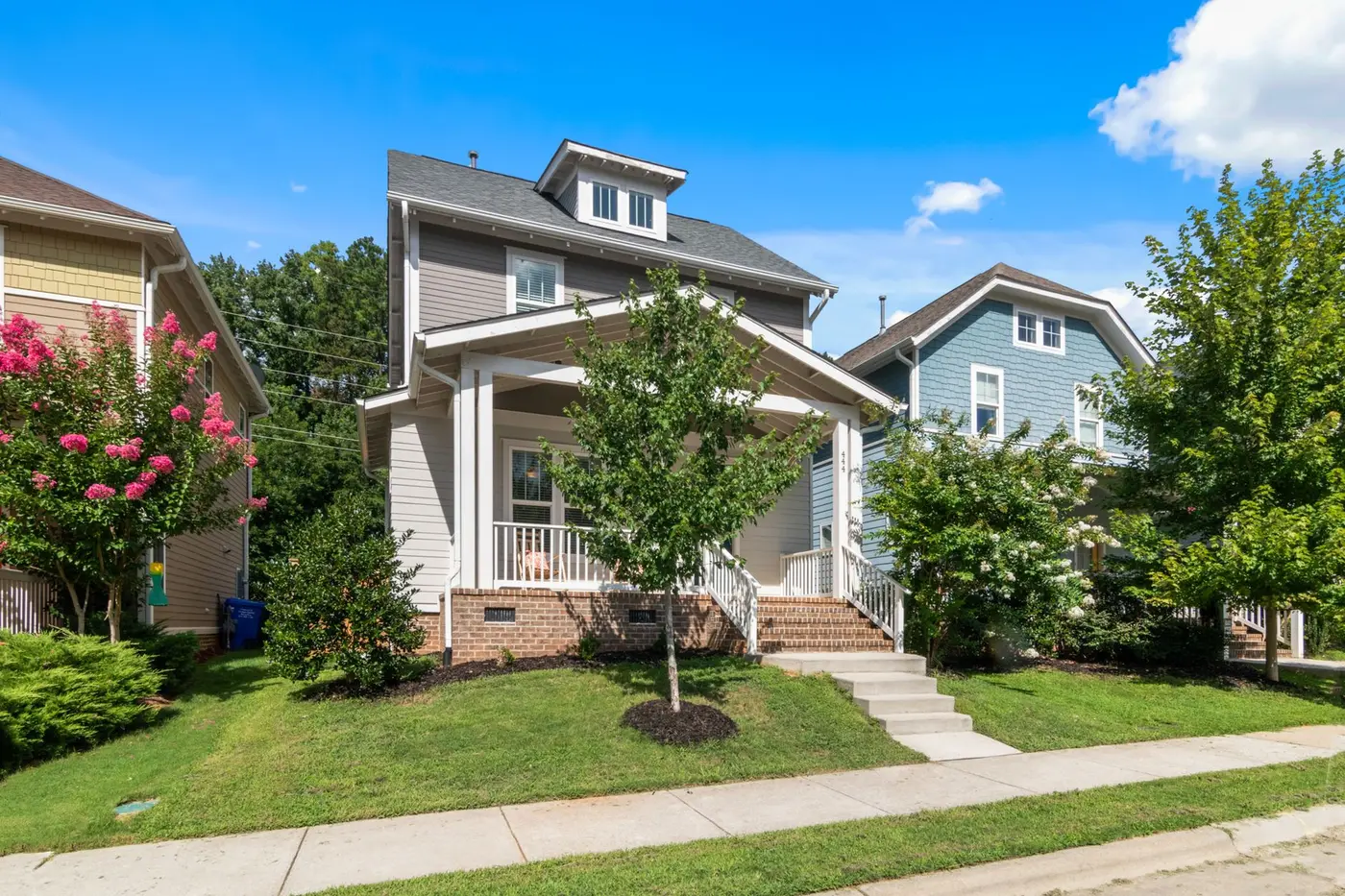
What kind of houses and roofs does Saanich have?
Mostly mid-century and later, with a long tail of older homes. The 2021 census counted 48,045 occupied dwellings in Saanich: 24 percent built in 1960 or earlier, 32 percent from 1961 to 1980, 30 percent from 1981 to 2000, and 14 percent since 2001. There were 22,380 single-detached houses, nearly half of all dwellings.
For a roof, that means most Saanich houses are old enough to be on at least their second covering, and the condition of the sheathing (the wood deck under the roofing) is the unknown. On houses that started life under cedar, the original deck can be spaced boards; asphalt needs a solid plywood layer over them, which belongs in the quote, not as a surprise halfway through the job.
How do rain, wind and trees change a Saanich roof?
Rainfall depends on which side of Saanich you live on. Environment Canada's University of Victoria station, on the Saanich and Oak Bay line, averages 661 mm a year for 1991 to 2020. The Francis Park station, near Francis/King Regional Park in west Saanich, averaged 1,029 mm for 1981 to 2010. The periods differ, but a roof in the western hills around Prospect Lake likely handles far more water than one in Gordon Head.
Inland Saanich is sheltered. The UVic station's mean wind is 6.1 km/h, and it logged no days with gusts of 90 km/h or more. The Cordova Bay and Cadboro Bay waterfronts are another matter, and no long-record station measures them.
Trees are the bigger factor. Saanich's 2019 LiDAR survey put canopy cover at 43 percent district-wide and 31 percent inside the urban containment boundary. Shade keeps north slopes damp, needles pack valleys, and moss lifts shingle edges so water wicks underneath. Before trimming branches over the roof, check the Tree Protection Bylaw: ordinary pruning of a protected tree to arborist standards needs no permit, but pruning a Significant Tree, or removing 25 percent of a tree's live crown, does.
What this means for replacement, repair and metal in Saanich
- Roof replacement: on shaded lots, ask how the valleys and eaves will be protected. Ice and water shield (a self-sealing rubberized membrane) in those spots is the standard guard against water backing up under debris.
- Roof repair: a leak under a big tree often traces to one packed valley or a run of moss-lifted shingles. If the rest of the roof has life left, a targeted repair can be the honest answer.
- Metal roofing: a smooth painted panel gives moss far less to grip than shingle granules, and needles slide off more readily, though debris still collects behind chimneys and in valleys.
- Price depends on pitch, tear-off layers and deck repairs more than on postal code. The cost guide explains the drivers.
Own a house in Saanich? Ask for a written, itemized roofing quote.
Get a written quoteSaanich roof replacement permit
Saanich's Building Bylaw does not mention reroofing either way. Section 7.1 requires a permit before "repairing or altering a building", and section 7.3 exempts "minor repairs or alterations to non-structural components". The District's list of work that needs no permit leaves roofing off. Langford and Sidney, by contrast, exempt reroofing in so many words.
The line is structure. Replacing rafters, changing the roof's shape or pitch, or adding a dormer clearly needs a permit. A like-for-like tear-off sits in a grey zone, so ask Saanich Inspection Services before the job is booked and keep the answer in writing. Our quote describes the scope in plain terms, which makes that question easy to ask. Start at the District's residential permits page, then ask us for a quote.
Neighbourhoods we roof in Saanich
Gordon Head, Cadboro Bay, Cordova Bay, Royal Oak, Tillicum, Quadra, Blenkinsop, Shelbourne.