
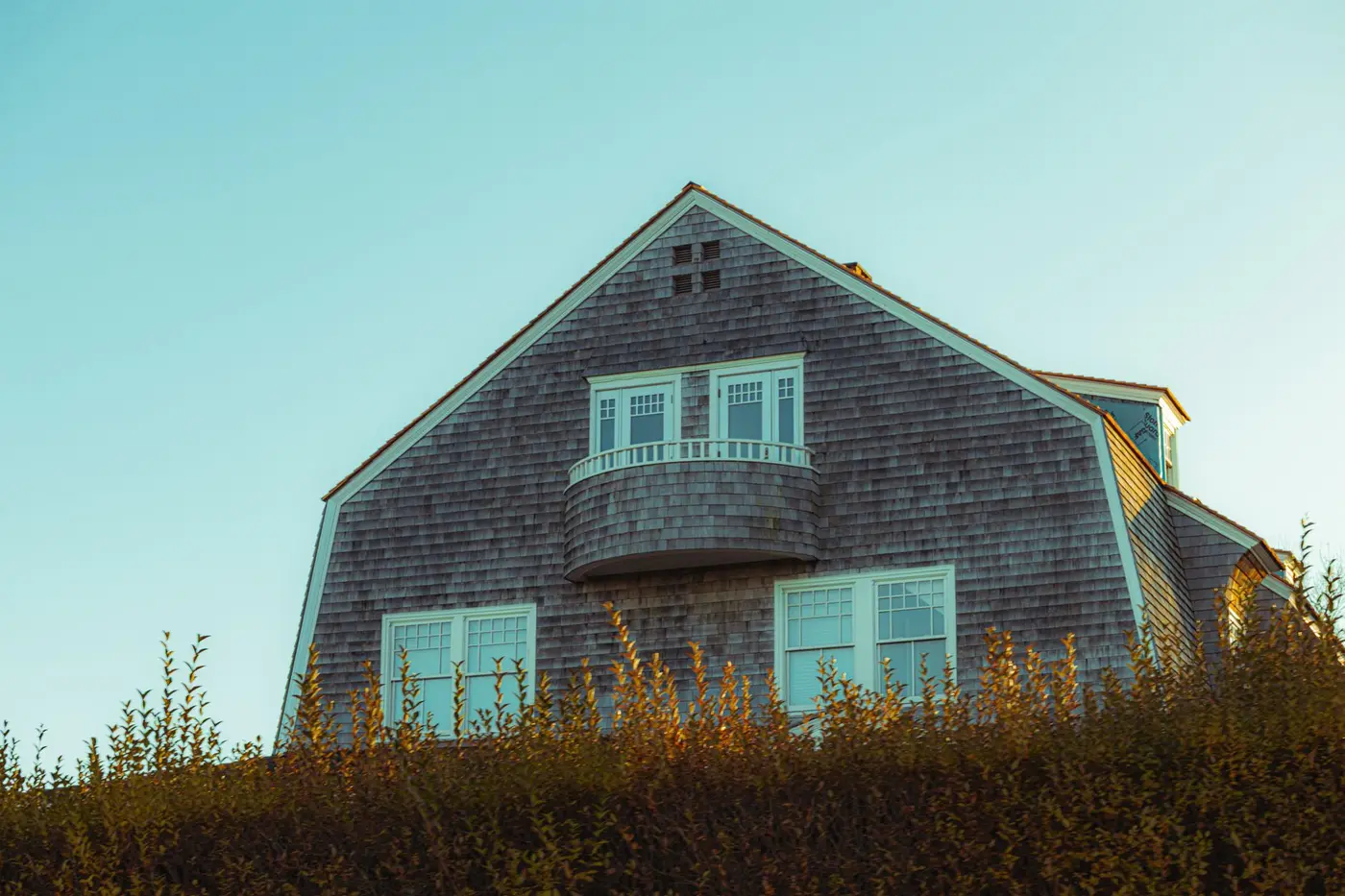
What kind of houses and roofs does Esquimalt have?
Older than most of its neighbours, and mostly not detached. The 2021 census counted 8,565 occupied dwellings in Esquimalt: 2,525 built in 1960 or earlier and 3,500 from 1961 to 1980, together 70 percent of the stock. Only 1,990 were single-detached houses, 23 percent of dwellings, the lowest share among the six municipalities with pages on this site.
So a detached Esquimalt house is likely to be decades old and on at least its second roof. Older houses often carry porches, additions or dormers added over the years, and each joint between old and new roofline is a place for water to get in. Low-rise apartment blocks and strata roofs are outside what we do, and so are flat or torch-on sections; if your house has one, the quote will say so plainly.
How does the water around Esquimalt affect a roof?
Mostly through wind and salt, not rainfall. Environment Canada publishes no climate normals for a station inside Esquimalt. The closest comparable exposure is the Gonzales station on the same southern shoreline, about 6 km east, which for 1991 to 2020 recorded a mean wind of 14.3 km/h, roughly 3.8 days a year with gusts of 90 km/h or more, and only 675 mm of precipitation. Its strongest gusts came mostly from the west and southwest.
Saxe Point and Macaulay Point face the strait with nothing in the way, and West Bay sits on the harbour. On those streets, the windward edges of a roof take the beating: shingle tabs lift, and rain is driven sideways under flashing (the metal that seals joints at walls, chimneys and valleys). Salt carried on that wind also works on any exposed metal, from flashing to fasteners.
What this means for replacement, repair and metal in Esquimalt
- Roof replacement: on older houses with add-ons, the roof-to-wall and old-to-new joints are where the quality of the job shows. Ask how each one will be flashed, not just which shingle is going on.
- Roof repair: a leak that appears after a southwesterly blow often enters on the windward side. Inside, catch the water, move belongings, photograph the stain and stay off the roof; the source can be traced from there.
- Metal roofing: metal handles wind well when the panels and edges are fastened for it. Near salt water, get the manufacturer's coastal warranty terms in writing, because coastal coverage often runs shorter than the standard paint warranty.
- The cost guide explains how add-ons and deck repairs move the price.
Own a house in Esquimalt? Ask for a written, itemized roofing quote.
Get a written quoteDo you need a permit to reroof in Esquimalt?
The bylaw does not say outright. Esquimalt's Building Regulation Bylaw No. 2899 (consolidated November 2023) exempts "minor repairs or alterations to non-structural components" in section 6.2.1 but never names reroofing, unlike Langford's and Sidney's bylaws. Anything structural, such as replacing rafters or reshaping the roof, needs a permit.
The Township's permit application also asks whether the work involves removing a tree; if it does, you must check with Esquimalt Parks about a tree cutting permit. Confirm the reroof question with the Township's building permits and inspections office before work starts, then request your quote.
Neighbourhoods we roof in Esquimalt
Saxe Point, West Bay, Rockheights, Gorge Vale, Esquimalt Village.